Quality. Precision. Accountability. Same-day plumbing and HVAC service across Western NC and the Upstate.

Water quality

Water quality testing and home water filtration in Asheville and Western NC

Good water treatment starts with knowing what is in your water. Blue Planet Plumbing and Air tests your city or well water, explains the results in plain language, and installs the whole-home filtration, reverse osmosis or UV system that fixes the problems you actually have.

(828) 202-7954

4.9 from 2,021 reviews

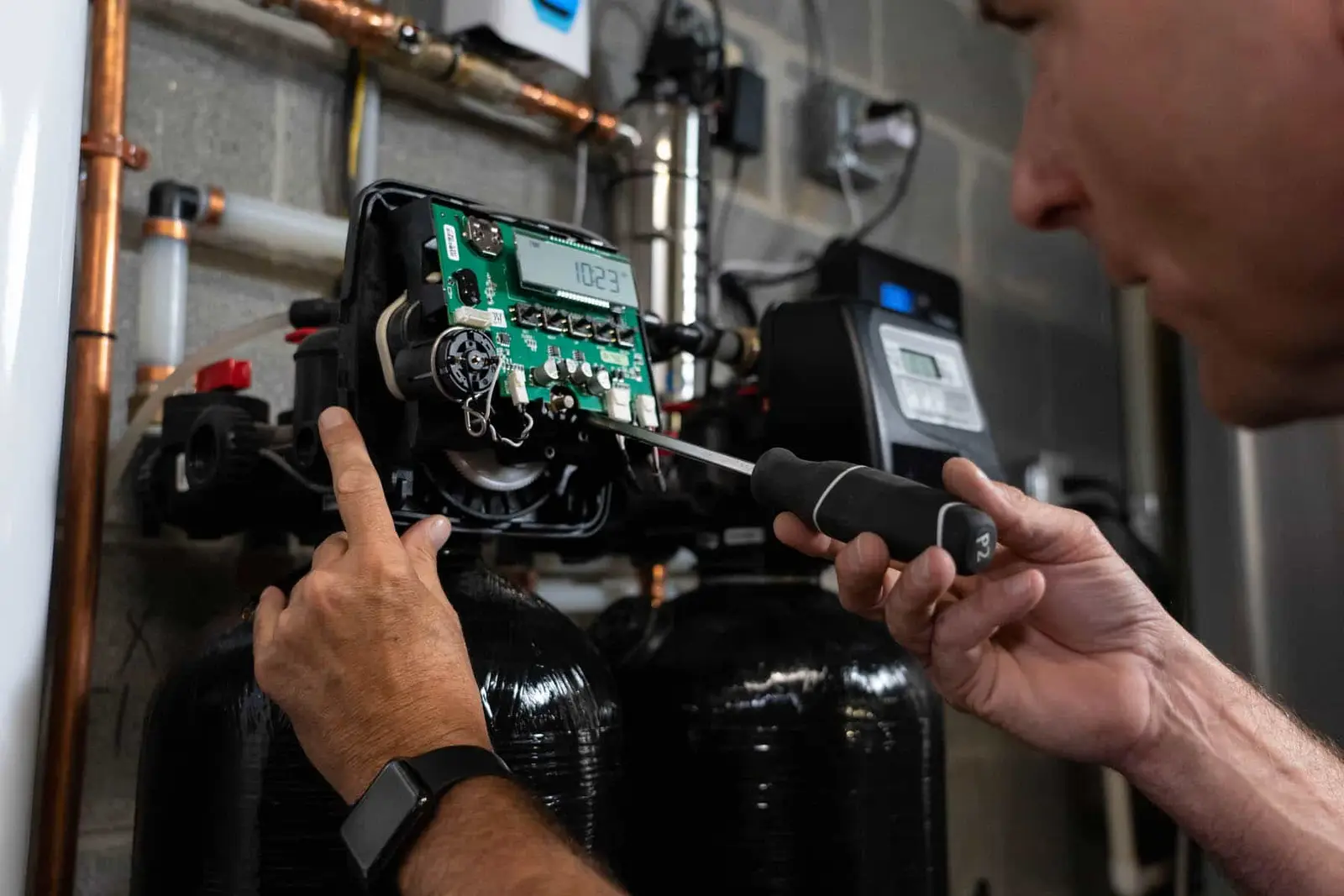
Technician adjusting the control head of a well water filtration system

Signs your water quality needs a closer look

Home water filtration in Asheville and across the mountains is not one-size-fits-all, because the water coming into a city home and a well home can be completely different. These are the signs that tell us where to start:

  • Chlorine taste or smell. Municipal systems disinfect with chlorine or chloramine. It keeps water safe in the mains, but many people dislike it at the tap and in the shower.
  • Blue-green stains on fixtures or pinhole leaks in copper. Acidic, low-pH water is dissolving the pipe. This is common on mountain wells.
  • Orange, brown or black staining. Iron and manganese are present, often on well water.
  • A rotten-egg smell. Hydrogen sulfide in the water, or a reaction inside the water heater.
  • Cloudy or gritty water. Sediment from a well, or stirred-up sediment in municipal lines after main breaks or storms.
  • Scale on fixtures and short-lived appliances. Hardness minerals are coating heating elements, valves and tankless heat exchangers.
  • You have a well and have not tested in more than a year. Bacteria and many contaminants have no taste, color or smell.

Water quality testing comes first

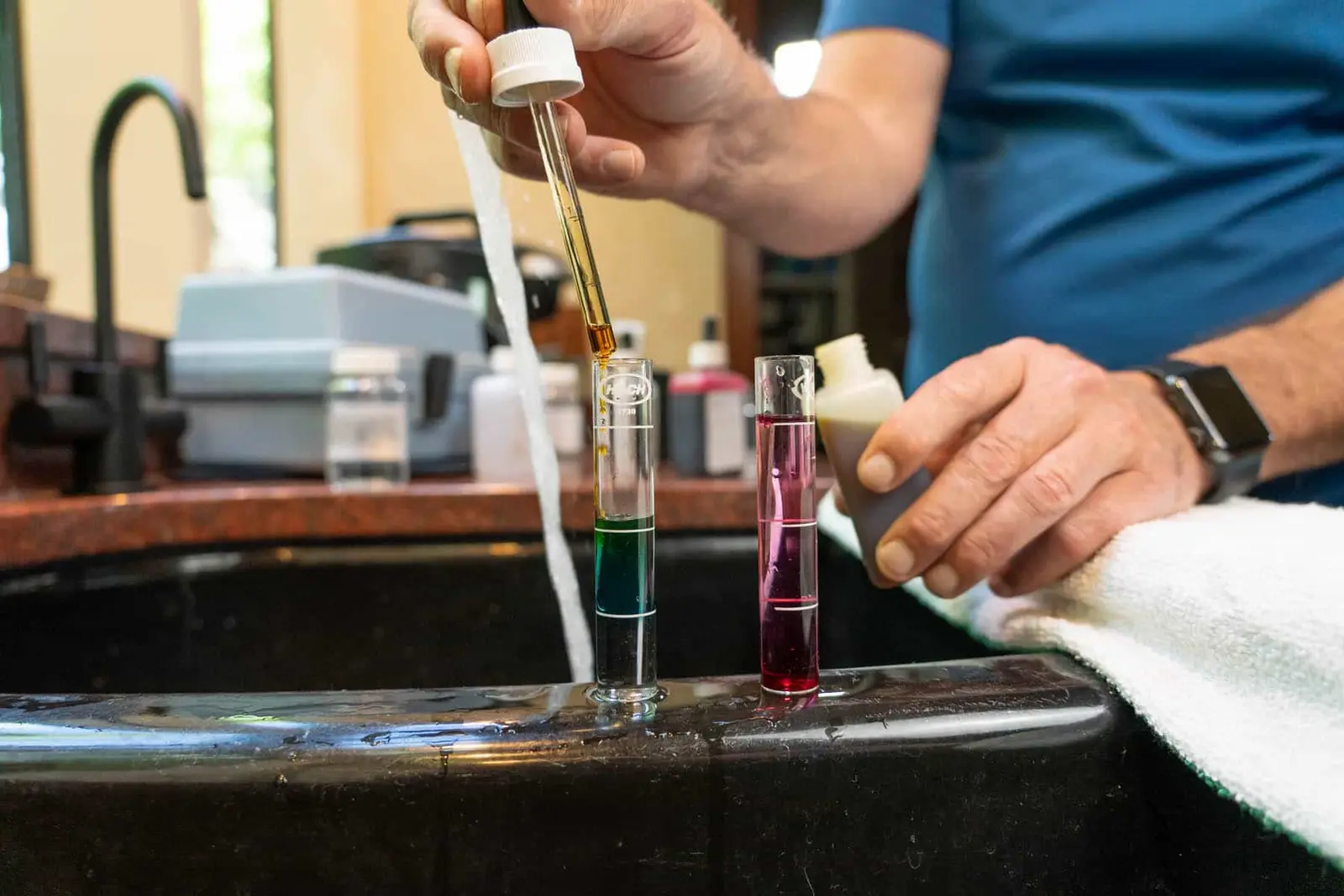
Technician adding reagent to a water sample at a sink

We do not recommend a system until we know what it needs to remove. Your technician tests the water at the tap for pH, hardness, iron, total dissolved solids and chlorine, and looks at the plumbing for corrosion, staining and scale that show how the water has been behaving over time. On city water we also look at your utility's published water quality report. On well water, where you are responsible for your own water safety, we recommend a certified lab test for bacteria and for contaminants a field test cannot measure.

North Carolina health officials recommend testing private wells for total and fecal coliform bacteria every year. The state's well testing requirement covers new wells installed since July 1, 2008, so many older mountain wells have never had a full panel done. A state study of private wells in selected Western North Carolina counties found groundwater tended to be slightly acidic, with a median pH of 6.1, and identified radon as the main radionuclide concern. That is exactly the kind of result that changes which equipment you need.

Once the results are in, you get a plain explanation of what we found and up to five written options, from a single under-sink unit to a complete treatment train.

Filtration and treatment systems we install

Reverse osmosis filter cartridges next to a glass of water
  • Whole-home carbon filtration. Water passes through a carbon block, activated carbon or catalytic carbon media that holds chlorine, chloramine, taste and odor compounds and many chemicals, so every tap and shower gets treated water. It installs on the main line before the water reaches any fixture.
  • Reverse osmosis. A point-of-use system, usually under the kitchen sink, that pushes water through a fine membrane to remove dissolved solids and a wide range of contaminants for drinking and cooking.
  • UV disinfection. Ultraviolet light inactivates bacteria and viruses without chemicals. It is the standard answer for wells with a bacteria problem, installed after sediment filtration so the light can reach the water.
  • Acid neutralizers. Calcite media raises the pH of acidic well water to protect copper pipes, fixtures and water heaters.
  • Iron, manganese and sulfur filters. Media systems that remove staining metals and rotten-egg odor from well water.
  • Water softeners and scale control. Reduce hardness that shortens the life of water heaters, dishwashers and fixtures.
  • Repair, maintenance and replacement. We service existing systems, replace cartridges and media, fix pressure loss caused by clogged filters, and upgrade systems that no longer match your water.

For wells, we often pair treatment with our residential well services so the pump, pressure tank and filtration work together.

City water and well water in the mountains and the Upstate

Asheville's municipal water comes from mountain reservoirs at North Fork and Bee Tree, plus a plant on the Mills River. Greenville Water in the Upstate draws from Table Rock and North Saluda reservoirs in the Blue Ridge foothills and from Lake Keowee. These are well-protected sources, but treated water still carries disinfectant, and it travels through miles of mains and your own home's older piping before it reaches the glass.

Hurricane Helene in 2024 showed how fragile that path can be. The storm washed out transmission lines at Asheville's North Fork plant, leaving much of the city without water for weeks, and a boil water notice stayed in place until mid-November 2024 while crews treated the muddy reservoir. Many homeowners now want a filter and a backup plan of their own.

Outside city limits, private wells are the norm in much of Western North Carolina and parts of the Upstate. Wells drilled into mountain bedrock often produce acidic water and can carry iron, manganese and radon, and shallow or older wells are more exposed to surface bacteria after heavy rain. Each well is different, which is why we test before we treat.

What affects the cost of a water filtration system

Cost depends on what the test finds, your household size and water demand, and the type of system you choose. A single under-sink reverse osmosis unit costs far less than a whole-home treatment train for a well with acid, iron and bacteria.

  • Number of problems to treat. Each contaminant can mean another stage of filtration.
  • Flow rate and household size. Larger homes need larger tanks and media beds to keep pressure up at every fixture.
  • Maintenance design. Lower-cost cartridge systems need regular cartridge changes; higher-cost self-cleaning systems run for years with little upkeep.
  • Space and plumbing. Room for tanks, a drain for backwash, and an electrical outlet for UV or control valves.

On city water, our whole-home systems have ranged from about $799 to $3,000. Lower-cost systems can carry annual cartridge costs of around $400, while self-cleaning systems can run around seven years without maintenance. We give you a flat price on each option, and payment plans are available through GreenSky, subject to credit approval.

Why choose Blue Planet for clean water

  • Test before we sell. Recommendations are based on your results, not a standard package.
  • Water chemistry experience. We treat city and well water across Western North Carolina and the Upstate and size systems to your flow and fixtures.
  • Green Plumbers USA certified. We favor systems that cut bottled water use and reduce waste.
  • Licensed plumbers do the install. The system goes on your main line correctly, with bypass valves so it can be serviced.
  • Complimentary safety inspection. Every service call includes a plumbing and HVAC safety check.

What our clients say

4.9

Average from 2,021 Google reviews

Read all reviews
“Paul is very knowledgeable, professional and very kind. He has been very reliable from installation through now. I highly recommend their products and technicians.”
Diane F., Google review
“Being a senior citizen, their process of letting you know who is coming and also a picture of the technician is very calming! I felt very safe allowing him into my home!”
Ambie G., Google review
“Very responsible. Cleaned up extremely well. Considerate of home and outside areas.”
Sandra R., Google review

Frequently asked questions

How do I know what is in my water?

Start with a test. We test pH, hardness, iron, dissolved solids and chlorine on site, and for well water we recommend a certified lab test for bacteria and contaminants that need lab equipment. City customers can also review their utility's annual water quality report.

How often should I test my well water?

North Carolina health officials recommend testing a private well for coliform bacteria every year, and after flooding, repairs to the well, or any change in taste, color or smell. A broader panel every few years helps track pH, metals and other contaminants.

Do I need a whole-home filter or just reverse osmosis?

It depends on the problem. If you want chlorine out of the shower and every tap, or need to protect pipes and appliances, a whole-home system makes sense. If your concern is drinking and cooking water, an under-sink reverse osmosis unit may be enough, and many homes use both.

Does a UV system replace a filter?

No. UV disinfects water by inactivating bacteria and viruses, but it does not remove sediment, metals or chemicals. It works best after sediment filtration so the light is not blocked, and it is the usual fix for a well that tests positive for bacteria.

Why is my well water turning my fixtures blue-green?

That staining usually means acidic water is dissolving copper from your pipes. An acid neutralizer raises the pH and protects the plumbing. We test the pH and check for pinhole leaks before recommending a system.

Should I filter my water after the Helene outage?

Asheville's water was declared safe when the boil water notice ended in November 2024. Many homeowners still choose filtration for better taste, chlorine removal and a layer of protection if lines are disturbed again. We can test your water and show you whether a filter would make a measurable difference.

Is a home water filtration system tax deductible?

Check with your accountant. Some past clients have been able to deduct the cost as a home improvement, but it depends on your situation.

How is a whole-home system installed?

A licensed plumber shuts off and drains the main supply, then installs the system on the main line before it branches to any fixture, with bypass valves for servicing. Backwashing systems also need a drain connection, and some need power.

Find out what is in your water

Book a water quality visit and get test results, explained, with options that match them.

Call now